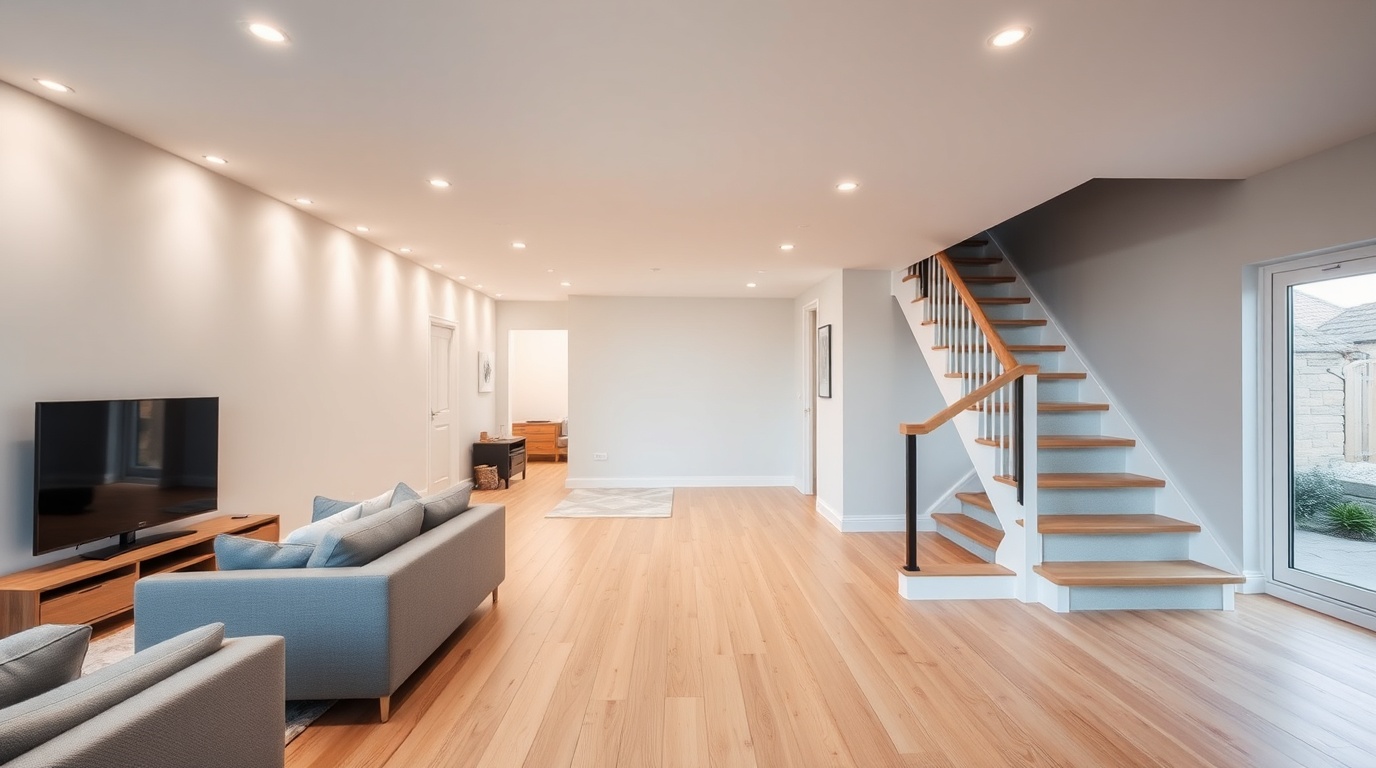
The short answer
There is no single fixed minimum ceiling height for habitable rooms in the current Building Regulations — the old 2.3m rule was withdrawn years ago. A basement just has to be a suitable, safe and usable habitable space. In practice, most people aim for a finished height of around 2.1–2.4 metres for a comfortable room, and lenders, valuers and buyers expect something close to normal room height. Where the Regulations do set a firm figure is stairs: you generally need at least 2 metres of clear headroom over the pitch line of a staircase. The catch in basements is the floor build-up — the new slab, drainage, insulation, screed and any cavity membrane can absorb a hundred millimetres or more, so your usable height is less than the raw dig. That is why basements are frequently dug deeper (and underpinned) to land a workable finished height. Confirm targets with your structural engineer and Building Control.
People often ask for the legal minimum, but the honest answer is that comfort, stairs headroom and floor build-up matter more than a single number. The notes below set out the figures that actually govern a basement.
Ceiling height at a glance
- Fixed minimum for roomsnone in current regs
- Comfortable finished height~2.1–2.4m typical
- Stairs headroomgenerally 2m clear over pitch line
- Floor build-upslab + drainage + insulation + screed
- Why dig deeperto land a usable finished height
Is there a legal minimum?
The often-quoted 2.3 metre minimum for habitable rooms was removed from the Building Regulations and is no longer a requirement, so there is no single legal floor-to-ceiling figure your basement must hit to be a habitable room. What the Regulations require instead is that the space is suitable for its intended habitable use, properly ventilated, lit, heated and safe to escape from. That said, valuers, surveyors and mortgage lenders judge a converted basement against normal expectations, and a room that feels cramped or below standard head height can affect value and saleability. So while there is no number to point to, the practical target is a finished height that reads as a proper room — commonly in the region of 2.1 to 2.4 metres.
Where the regulations do set a height: stairs
The firm headroom rule in a basement project applies to the staircase. The Building Regulations generally require a minimum of 2 metres of clear headroom measured vertically over the pitch line of the stairs. A reduced allowance can apply in tight loft conversions, but for the main access stair to a habitable basement you should plan for the full 2 metres. This matters because the stair often runs down into the basement at exactly the point where the floor has been lowered, and getting both the room height and the stair headroom to work together is part of the design. If head height is tight, the stair geometry — going, rise and the opening at the head of the flight — frequently becomes the controlling constraint rather than the room itself.
| Measure | Typical position |
|---|---|
| Habitable room minimum height | no fixed figure in current regs |
| Comfortable finished room height | ~2.1–2.4m |
| Stairs headroom (main flight) | generally 2m clear over pitch line |
| Floor build-up to allow for | slab, drainage, insulation, screed, finish |
Indicative figures for guidance. Source: Planning Portal Approved Documents (Part K stairs, habitable room guidance).
Floor build-up: the height you lose
The number that trips people up is the difference between the raw excavated depth and the finished usable height. Below the floor you will typically have a new structural slab, often a drainage layer or cavity drainage membrane, insulation to meet Part L, a screed and the final floor finish. Above, you may lose a little to insulation and finishes at ceiling level, plus any service runs, downlights or drainage falls. Together these can absorb well over a hundred millimetres, so a dig that looks generous can leave a finished room noticeably lower. This is precisely why basements are often excavated deeper than the head height you want — and why that extra depth, going below the existing footings, brings underpinning into the project. The reliable approach is to work backwards: decide the comfortable finished height you want, add the full floor and ceiling build-up your engineer and waterproofing designer specify, and that tells you how deep you must dig and therefore whether underpinning is required.
Frequently asked questions
Is there a minimum ceiling height for a habitable basement?
No fixed legal minimum applies in the current Building Regulations — the old 2.3m rule was withdrawn. The space must be genuinely habitable, and in practice a comfortable finished height of around 2.1–2.4m is the usual target, partly because lenders and surveyors judge the room against normal expectations.
What headroom do basement stairs need?
Generally at least 2 metres of clear headroom over the pitch line of the staircase. A reduced allowance can apply in loft situations, but for the main access stair to a habitable basement plan for the full 2 metres, as the stair often controls a tight design.
Why do basements get dug deeper than the final ceiling height?
Because the floor build-up — new slab, drainage, insulation, screed and finish — absorbs height, so the finished room is lower than the raw dig. To land a comfortable finished height you often excavate deeper, which takes the dig below existing footings and brings underpinning into the project.
Sources & further reading
- Planning Portal — Building Regulations Approved Documents
- GOV.UK — Approved Document K (stairs and protection from falling)
- RICS — converting and valuing basements
Figures on this page are typical UK ranges drawn from published sources and depend on your specific property. They are guidance, not a quotation.