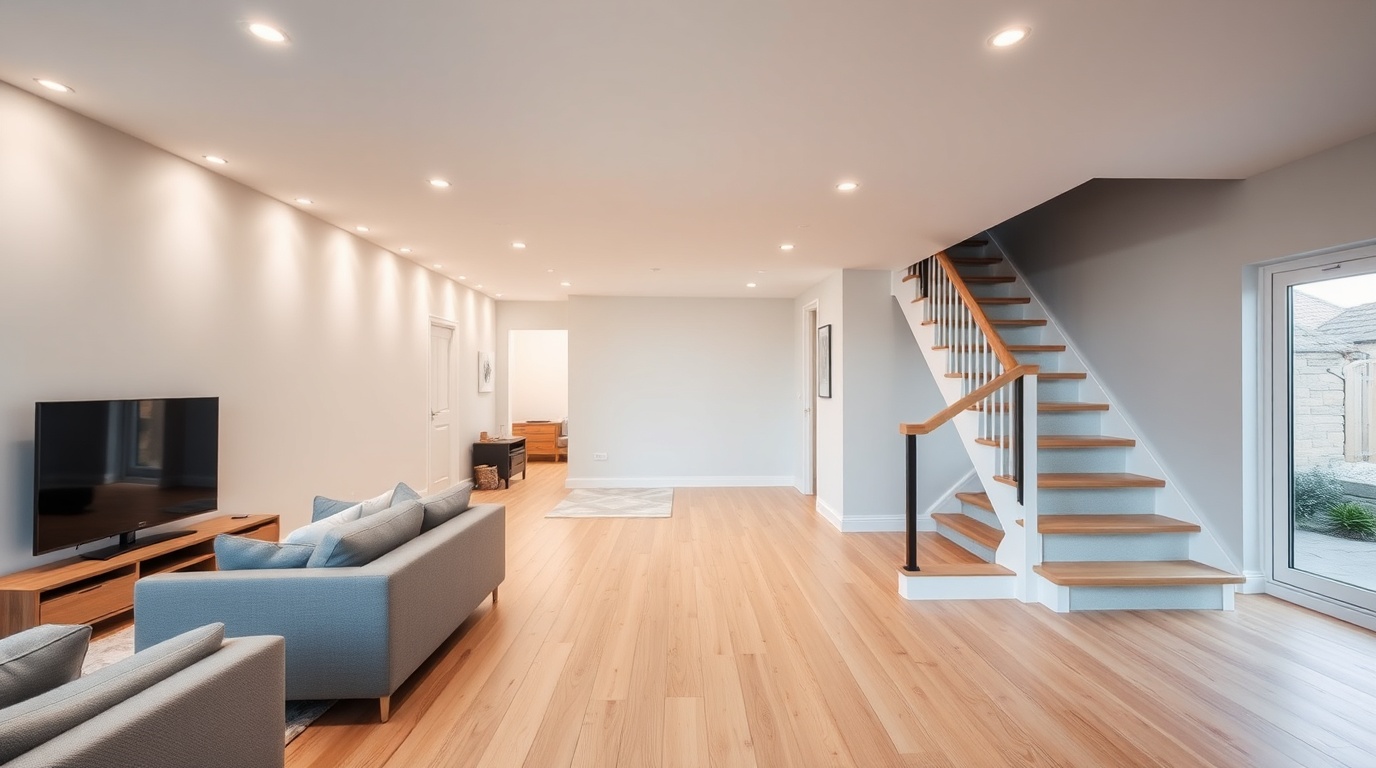
The short answer
A new basement staircase in the UK typically costs between £1,000 and £5,000+ depending on material, design and structural work. A straightforward timber flight in a standard layout sits at the lower end, while a wider, turned, or bespoke steel or glass staircase costs considerably more. The figure rises if forming the new opening means cutting through a floor and adding structural support, which needs an engineer and a steel beam. Stairs to a habitable basement also have to meet building regulations for pitch, headroom, going and rise, and may form part of the protected escape route in a fire, which can affect the design and finishes. Reusing an existing stair opening is the lowest-cost route; relocating or widening it adds structural cost.
The staircase is easy to overlook in a basement budget, yet it is both a structural and a fire-safety item. The sections below set out typical costs and what drives them.
Typical UK costs
- Standard timber flight~£1,000–£2,500
- Wider / turned stair~£2,500–£4,000
- Bespoke steel / glass£4,000–£5,000+
- New structural openingAdds beam + engineer
- Must meetBuilding regs + escape rules
What sets the price
The cost of a basement staircase depends first on whether you are reusing an existing opening or forming a new one. Reusing the existing cellar stair position is the lowest cost, since you only replace the flight. Forming a new opening means cutting through the ground floor, adding a structural beam to carry the floor around the hole, and engaging a structural engineer, which adds significantly. The staircase itself then varies by material and design: a standard straight timber flight is the most economical, a wider or quarter-turn stair costs more, and a bespoke steel, oak or glass feature staircase is at the top. Balustrades, handrails and finishes add further.
| Staircase type | Typical cost | Notes |
|---|---|---|
| Standard timber flight | £1,000–£2,500 | Reusing existing opening |
| Wider / quarter-turn | £2,500–£4,000 | More material, more space |
| Bespoke steel / glass | £4,000–£5,000+ | Feature staircase |
| New structural opening | Add £1,500–£4,000+ | Beam, engineer, making good |
Indicative UK figures for guidance only. Costs vary with design, material and structural work.
Building regulations and fire escape
A staircase to a habitable basement is not just a fixture, it has to comply with building regulations. These set requirements for the pitch, the rise and going of each step, the headroom above the flight, the width, and the handrails and guarding. In many basement conversions the stair also forms part of the protected means of escape, the route by which people leave the building in a fire, which can mean fire-rated doors and linings at the top of the flight and influences where the stair can go. These requirements shape both the design and the cost, and building control will inspect the finished stair against them before sign-off.
Placing the stair in the project
Because the staircase ties together the structure, the layout and the fire strategy, it is best considered at design stage rather than as an afterthought. Where it lands at the bottom affects how the basement floor is laid out and how much usable space you keep, while where it starts at the top affects the room above. Relocating the stair to improve the layout is appealing, but it adds the cost of a new structural opening and making good the old one, so the trade-off between a better arrangement and a higher cost is worth weighing deliberately.
From a budget point of view, the lowest-cost compliant solution is usually a standard timber flight reusing the existing opening, with the cost rising as you move toward a relocated, widened or bespoke design. Whatever you choose, the stair must meet the building regulations for stairs and contribute properly to the escape route, so it is not a place to improvise. Designing it with the structural engineer and to the fire strategy from the start avoids costly rework and ensures the finished basement passes building control.
Frequently asked questions
Do basement stairs have to meet building regulations?
Yes. Stairs to a habitable basement must meet the regulations for pitch, rise and going, headroom, width and guarding, and they often form part of the protected fire escape route. Building control inspects the finished stair against these requirements before sign-off.
Is it cheaper to reuse the existing cellar stair opening?
Usually, yes. Reusing the existing opening avoids cutting a new hole through the floor and adding a structural beam, which is one of the more expensive parts of a new stair. Relocating or widening the opening adds engineering and making-good costs.
Can I have a bespoke feature staircase in a basement?
Yes, steel, oak or glass feature stairs are common in basements, but they cost considerably more than a standard timber flight and must still meet the building regulations and fire escape requirements. The design should be agreed with the structural engineer and building control.
Sources & further reading
Figures on this page are typical UK ranges drawn from published sources and depend on your specific property. They are guidance, not a quotation.